Showing posts with label Danny Solis. Show all posts

Saturday, January 28, 2012

White guys in the Latino caucus?

It always amused me that state Rep. Dan Burke, D-Chicago, went out of his way to include himself in the Illinois House’s Latino caucus – making a point of sitting in with other Latino state legislators whenever they would meet privately to derive their stance on certain issues.

Burke said he felt that since his legislative district on the Southwest Side had such a significant Latino population, it was his obligation to try to understand his constituents.

BECAUSE NOT COMPREHENDING them would be a sure-fire way toward having them turn on him and vote someone else into office.

Some people ridiculed his gesture as nothing more than a token effort to understand Latinos, and that just because he sat in on a few meetings did not make him suddenly aware of what his constituents were thinking.

But on the whole, I always saw his gesture as being more than most political people were willing to do – since the usual reaction of a political person representing an area with a growing Latino population is to somehow cling to the declining white population in the area and try to figure out ways to maximize its political power!

In short, political denial.

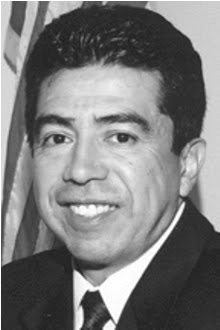
SO IT IS with a feeling of amusement that I will be observing the City Council in coming months, where the head of the council’s Latino caucus (25th Ward Alderman Danny Solis) said this week that the caucus is now willing to include aldermen who represent neighborhoods with significant Latino populations.

Solis said he wants to increase the influence of Latino politicos, and figures that this is one way to boost the total numbers – which will go up after the 2015 municipal elections when new aldermen are elected under the new ward map that has 13 Latino-based wards and two more wards that are Latino-influenced.

Now whether that tactic will work is questionable. Because the real factor is whether the white aldermen will want to alter their view of the world to include their Latino constituents more thoroughly.

If they don’t want to, it won’t matter if Solis is able to include their names on his “list” of Latino-leaning aldermen. Latinos might not gain much from this move.

BUT I WILL say that if these aldermen have any sense whatsoever, they will reach out to their growing numbers of Latino constituents (29 percent of the city’s overall 2.7 million population is Latino, according to the 2010 census).

If they have any sense, they will accept this invitation as the least of gestures they can make to representing the people who live within their wards. They ought to be jumping at the chance to make this move. If they’re not willing to do so, then perhaps they deserve to get dumped come the ’15 election cycle.

So 14th Ward Alderman Edward Burke (Dan’s brother) will get the chance to show some understanding, as will 10th Ward Alderman John Pope (whose ward includes some of the oldest Spanish-speaking enclaves in Chicago and will now be 63 percent Latino).

Other aldermen who got un invitado include Marty Quinn (13th Ward), Toni Foulkes (15th Ward), Michael Zalewski (23rd Ward), Nick Sposato (36th Ward) and Richard Mell of the 33rd Ward, who was in charge of the recently-completed redistricting effort for the Chicago City Council and whose daughter, Deb Mell, serves in the Latino Caucus in her role as a state representative from the Northwest Side.

SO WHILE CANDIDATES such as Pope have been successful at defeating Latino challengers (claiming he can appeal to Latino voters) and people like Sposato had approached the Latino Caucus leadership in the past about being included (only to be rebuffed), we’re going to get a better picture of how interested they are in the growing segment of their wards.

This is one case where a politician acting in their own self-interest would also be beneficial to the people of Chicago as a whole.

  -30-

Thursday, December 22, 2011

Will Latinos gain in small City Council?

I’m not convinced that Latino political empowerment will really be advanced by cutting the size of the City Council.
SOLIS: Is fewer better?

That is the line of logic being offered up by 25th Ward Alderman Danny Solis these days, who says that if all the existing boundaries have to be scrapped and we start over then it becomes easier to give Latinos a “fair” share.

WITH “FAIR” BEING dictated by the concept of Chicago’s “official” population of 2.7 million people being 33 percent black, 32 percent white and 29 percent Latino (with the remaining 6 percent being mostly Asian). He says it could result in eight white wards, eight black wards, seven Latino wards and two other wards that could flop around from ethnicity to ethnicity.

I wonder if it just increases the potential for gerrymandering because multiple neighborhoods would have to be combined to create 25 wards (there are roughly 120 neighborhoods and sub-neighborhoods within Chicago).

But the move also is being portrayed by some people as Latinos “calling the bluff” of Mayor Rahm Emanuel, who has said that he will push for a reduction in the size of the City Council if aldermen can’t get their act together and agree on new boundaries for the existing 50 wards.

Those wanting to know more need to check out this weblog’s sister site, The South Chicagoan, for more details.

  -30-

Thursday, November 3, 2011

Are they just being practical?

I recall a moment from just over two decades ago when I was in Grant Park. It was a summer night with Michigan Avenue in the background, and I was a part of the crowd at the Blues Festival that summer.
SOLIS: More city revenue?

I couldn’t help but notice a guy about 30 feet away from me wearing a big overcoat, which struck me as being very unseasonal for summertime. He pulled out of his pockets a substance that appeared to be an illegal one.

APPARENTLY, HE DIDN’T notice the two uniformed police officers who were about five feet behind him, and who suddenly took their own interest in him.

I saw those two officers grab the guy and haul him away. All of this took a matter of seconds to occur. And it might not have been memorable to me, if not for what I saw about 10 minutes later.

It was the same guy with the overcoat. His hair was mussed up a bit, and his mood was angry. For what it turns out that the Chicago police officers did was confiscated his stash (which was a plastic baggie filled with what I believe to be marijuana) and threw it in the sewer.

Then, they let him go.

NO CHARGES. NO legal process. And for those of you who want to believe that these substances are a scourge on our society that needs to be eradicated, it had the effect of lessening the amount of drugs in circulation.

Unless someone is sorry enough to dig down into the sewer to try to get their fix. In which case, they have more serious problems in their lives than the need to get high.
EMANUEL: Not sure yet

It was this moment from the mid-1980s that came to my mind again Wednesday when I learned that the City Council is contemplating changes in its ordinances related to possession of the so-called illegal drugs.

Under the proposal now pending, possession of marijuana would no longer be a criminal offense. Nobody’s talking about legalization of such drugs (although that might be a logical alternative).

IT WOULD BECOME a ticket-able offense. Cops would literally have to whip out the ticket books and issue the citation for people caught with amounts of drugs that clearly do not make them any kind of dealers.

Those people would have to show up in court and pay a fine for their drug-induced actions.

Which might not have the same emotional satisfaction as knowing that some drug abuser had his stash dumped down the sewer. But it might be the most practical.

I remember my gut reaction from those decades ago (I was college-age back then) was part shock to see that a police officer would be willing to let someone caught with a drug go free. But it just also struck me as being sensible.

BECAUSE THIS PARTICULAR guy (I have no idea who he was, and I have never seen him since) was doing something that truly would have been a waste of the criminal justice system’s time if they had to prosecute him.

So we either allow the police to start writing out tickets and treat the “offense” for the minor act that it is. Or we start allowing our police to shake people down so they can dump the drugs in the trash. I doubt anyone would prefer the latter alternative.

I find it interesting that Mayor Rahm Emanuel himself is wavering on this issue. He says he hasn’t made up his mind about the proposal put forth by 25th Ward Alderman Danny Solis – one that calls for possession of small amounts of drugs to be punishable by fines of $200.

Solis argues that reducing the seriousness of marijuana possession would allow the existing number of police officers to focus attention on more serious crime.

YET THERE ARE those who cannot look at this issue rationally, and my guess is that Emanuel is trying to figure out how intense their outcry will be if he goes along and supports the proposed ordinance change.

For too many people want to look at this issue ideologically, rather than rationally. They want to believe that marijuana is a drug used only by certain types of people (I’m sure the phrase “hippie freaks” pops into their heads) whom they have no qualms about harassing.

Although the reality is that marijuana is a drug that cuts across social and economic classes. In fact, there are times when the social conservatives go on their diatribes that I can’t help but wonder if they’re saying such stupid things because they’re stoned!

Who’s to say?

ALL I KNOW is that the City Council’s proposal is a step in the right direction, and it’s not even an original idea. Several suburban communities already treat minor drug possession as a ticket-able offense.

So it really comes down to whether the city wants to join the ranks of other practical communities, or remain rigidly locked into the past just to please some ideologues.

  -30-

Friday, September 2, 2011

With minorities being the majority, will this pressure Quinn to back casinos?

Call it the “white guilt” tactic, if you will, to try to persuade Gov. Pat Quinn to quit being the obstacle to the city of Chicago being able to get a long-desired casino.
QUINN: Will he listen?

How else should we think of the fact that the Latino and African-American members of the City Council this week banded together to make a statement that Quinn will lose ethnic and racial support if he doesn’t give in on this particular issue?

NOW AS A Latino male who personally thinks of casinos as tacky places and doesn’t really relish the thought of losing money while playing cards, I kind of find that tactic to be embarrassing.

While I realize that the decision whether to gamble or not to gamble is an individual one and that many Latinos probably would like to spend time at a casino based within the city limits, I’d hate for people to think that the concept of a casino near downtown Chicago is some special concern that ALL Latinos are supposed to get behind.

Which is why I must say that I wish this had not been presented as anything resembling an ethnic concern.

As 25th Ward Alderman Danny Solis told reporters, Quinn needs to think of this issue in ethnic terms because, “These are also the constituencies that … have the worst neighborhoods and, as far as infrastructure is concerned, the biggest need.”

SOLIS SAID, “SPEAKING for Hispanics, this is the constituency that really does need to look at the problem of our crumbling schools and more schools being built.”

And 21st Ward Alderman Howard Brookins said Quinn owes a casino to minorities (68 percent of the city’s population, according to the latest Census Bureau reports) on account of the support given to him during the last election cycle.
SOLIS: Latino communities need money

“There’s always a political consequence to anything you do or you don’t do,” he said.

So is the minority that makes up the majority of Chicago really going to remember and quit on Quinn come 2014? I doubt it, and I’d like to think that the Latino electorate isn’t that shallow.

WE (AND I mean all people, not just Latinos) ought to have higher priorities in mind than whether or not some business consortium gets a license to print money by operating a casino in Chicago – whose real purpose is to take away from the gross incomes of casinos in places such as Joliet, Aurora and Elgin.

And Hammond, East Chicago and Gary in Indiana – which may well be the top priority of putting a casino in Chicago. Keep the dollars in Illinois.

The idea that anyone is pushing for a casino to raise more municipal dollars to benefit the non-white neighborhoods of Chicago is just incredibly naĆÆve. To hear select aldermen try to claim that ethnic neighborhoods are going to be the major beneficiaries of a casino sounds less-than-honest.

Because I’m realistic enough to know that a significant share of any money raised through municipal taxes from the presence of a casino will go toward projects that benefit the downtown business district, or the North lakefront neighborhoods.

OR SOMETHING THAT cannot be strictly defined as an infrastructure project in a place like Pilsen, Englewood or South Chicago.

Will these same aldermen then be complaining that not enough of the casino money is being spent on their communities? That would be a more honest charge to make than these claims that Quinn is somehow selling out the non-Anglo segment of Chicago because he has serious concerns about the way in which the General Assembly went about passing a bill for casino expansion.

I would only hope these same aldermen will be willing to hold Mayor Rahm Emanuel to the fire to ensure that their wards receive equitable shares of any proceeds that come from casinos.

But I doubt, somehow, that these aldermen will be willing to make such a bold statement against the mayor as they have this week against the governor.

BECAUSE I REALLY view this week’s action as being one meant more to curry favor with Emanuel – who in recent weeks has engaged in an often-juvenile exchange of insults with Quinn over the casino issue.

The aldermen have now taken sides. Which means they had better hope he prevails. Although considering that Quinn is the one with the “veto” pen, I’d say that the governor will ultimately succeed on some level.
BROOKINS: Political payback?

Considering that the issue is not likely to get to Quinn until some serious revisions are made to the bill through political negotiation, I would think those aldermen would be more interested in pressuring their respective legislators if they were serious about this particular issue.

I only hope that Quinn is big enough a man not to let this become personal. Or else he might try to figure out some political equivalent of using the National Guard against those ethnic and racial minority wards – which in Chicago political terms could easily result in them getting less than their needed level of services and funding when it comes to state grants that the city relies upon to bolster its own budget.

  -30-

Monday, July 19, 2010

EXTRA: Term number 7?

For what it is worth, I could not help but notice a sign Monday at Damen and Cermak avenues promoting the re-election bids of Mayor Richard M. Daley and 25th Ward Alderman Danny Solis.

To answer your suspicion, the sign was nowhere near battered up enough to be a holdover from the 2007 campaign. So even though Hizzoner, Jr., has yet to declare anything, at least some political people already are trying to gain benefits for themselves with the notion of “Daley in ’11.”

-30-

Thursday, June 10, 2010

“Symbolic” boycotts, what’s the point?

It seems like our politicians these days want to take tough stances against Arizona state government for their decision earlier this year to have local police get involved in federal immigration enforcement. But they don’t seem to want to do anything about it that would show any true muscle.

The City Council on Wednesday became the latest government body to pass a measure that is billed as a stand against Arizona. Some even say it is a boycott.

YET THE MEASURE passed by our aldermen doesn’t impact current contracts, and includes so many loopholes that for all practical purposes it will do nothing to take any Chicago government business away from any company based in Arizona.

This measure may be even more lame than the Cook County Board, which a couple of weeks ago passed a measure restricting the county’s ability to do business with Arizona-based companies, only to later in that same meeting approve a new contract WITH an Arizona-based company.

Everybody wants to pontificate, but nobody wants to do anything that might impact their ability to take in the almight dollar.

“We are raising our voices,” Alderman Danny Solis of the 25th Ward said, while admitting the gesture is purely “symbolic,” which is the same word that was bantered about last month when suburban Calumet City became the first Chicago-area community to pass such a measure.

BUT SOLIS GOT to climb up on his pedestal during the City Council session and denounce Arizona as being “evil” and “monstrous” and even got to mention “Nazi Germany.” It may score political points for pompous rhetoric. But it is not going to do much. Arizona is going to have to lose financially to make their officials realize how stupid their gesture on immigration truly was.

If this is the approach that our government officials are going to take, I almost wish they would just not bother. What is the sake of passing Arizona boycotts that don’t effectively boycott a thing? Their “symbolic” gestures threaten to turn the concept into a joke.

For the record, two of the 50 aldermen voted against the measure. Brian Doherty of the 41st Ward (which has long been the one place in Chicago that is willing to be represented by Republican Party officials) and James Balcer of the 11th Ward were the two.

While I know a certain generation is not the least bit surprised that someone representing the people of the Bridgeport neighborhood would refuse to support even a symbolic gesture against a state that gives in to the share of its population that lets nativism overcome common sense, I have to wonder if this one can backfire.

MODERN-DAY BRIDGEPORT, AFTER all, is a neighborhood with a significant share of Mexican-Americans, and the Chinatown district to the north has long been overflowing to the point where many people who say they live “near” Chinatown are actually living “in” Bridgeport.

Balcer justified his vote, telling reporter-types at City Hall that he does not think the council should be doing anything to take a stand on what is (immigration) a federal issue. He’s right, but wrong too.

Immigration is a federal issue. But what a boycott, or any symbolic gesture, does is says that another local government is wrong for trying to interfere, and that such interference has the potential to make a mess of any federal attempt to enforce immigration laws.

We also got to learn that Mayor Richard M. Daley isn’t too thrilled about boycott talk, and he is correct when he says it is, “difficult to boycott businesses.” It takes a strong will to pull off, particularly since some people will look for any little tidbit of information to try to claim that the boycott itself is a failure.

BUT WHEN HIZZONER Jr. started talking about how an Arizona boycott would complicate life whenever the Arizona Diamondbacks came to Chicago to play the Cubs or (during inter-league play) the White Sox, it came off as sounding like the mayor was more concerned about who would criticize him if he refused to let the family season tickets to U.S. Cellular Field go to waste when the day comes (not this season) that Arizona travels to the South Side to play ball.

Then agani, maybe Daley is on to something by thinking about baseball.

Because no matter how much people rant and rage that the Diamondbacks should be penalized or next year’s Major League Baseball All-Star Game should be moved from Phoenix, the gesture that would really hurt the state would be if all those major league clubs (15) that hold spring training across Arizona were to cut back their spending in that state.

Rhetoric is easy to ignore. Hitting them in the wallet will catch their attention. And that is what “symbolic” resolutions fail to do.

-30-

Friday, August 1, 2008

Chicago an immigrant magnet that also attracts massive political bloviation

It’s no secret that the Chicago population is a mish-mash of ethnicities. Throughout its history, newcomers to the United States have seen the Second City and its surrounding area as a perfect place to begin their lives in a new country.

In fact, I’d argue that Chicago can serve as the immigration issue’s version of a Rorschach test. Let people take a quick look at the Second City, and we can figure out where they stand on the issue.

THE PEOPLE WHO are misguided enough to think our wonderful city on the shores of Lake Michigan has a problem are probably the ones who are most clamoring for a tightening of the immigration laws in this country so as to remove people from within our boundaries.

But many of the people who have made their lives here are the ones who realize the benefits of a continuous influx of newcomers – it helps keep the region (and ultimately the nation) from becoming stale economically and socially.

The fact that even the long-running families of Chicago can trace their lineage back a few generations to immigrants makes them realize these new newcomers are going to make the same adjustments and become a part of our establishment with the passage of time.

City Hall will be the focus next week of problems immigrants face in dealing with law enforcement. The only difference between today's immigrants and the ones who made up Chicago's population back when this century-old postcard was contemporary is that now they speak Spanish or Arabic, rather than Polish or with an Irish brogue.

That is why Chicago has followed the example of certain other places, such as New York, in declaring itself a “Sanctuary City,” a refuge of sorts for immigrants, regardless of whether or not they have a valid visa or all the proper papers.

NOT THAT BEING an “illegal alien” (to use federal government technospeak) is legal in Chicago. It only means that Chicago police and other city officials, should they stumble across information indicating that a person might not have the proper papers, do not make an effort to point them out to federal immigration officials.

City officials act as though the federal government should enforce its own laws, and not expect Chicago government to do it for them. That is a 180-degree difference from the views of people such as Maricopa County (Ariz.) Sheriff Joe Arpaio, who in recent months has led raids searching for people without papers in the Phoenix area that have resulted in many legal residents being harassed because of their ethnic background.

The legal theory behind a “Sanctuary City” policy is that local officials do not fully appreciate all the nuances of immigration law, and should not be making any efforts to enforce federal acts out of fear they may erroneously penalize someone who has legitimate business being in this country.

Such policy is why the City Council is taking it upon itself to conduct its own investigation into whether or not immigrants are being penalized within Chicago’s boundaries.

NOW THE CITY Council, as a local government body, does not have authority to start penalizing the federal government. The special committee hearings to be held next week at City Hall are more of a symbolic gesture – government officials in Chicago want to show they are supportive of the newcomers to the city.

So council members, led by Ald. Danny Solis (brother of Democratic vice presidential candidate chief of staff Patti Solis Doyle), will be taking the time to let dozens of immigrants tell their stories.

They are going to focus on cases where inmates at Cook County Jail were turned over to federal immigration officials once their local cases were disposed of.

In theory, the county sheriff does inform immigration of the inmate’s existence, but there have been some accounts of people without papers at the jail who were held indefinitely at county expense before federal officials could take custody of them – despite rules that require a 48-hour time limit on such additional detention of would-be undocumented immigrants.

THEY ALSO ARE going to study claims of some immigrants who claim Chicago police officers questioned them about their immigration status during traffic stops, and have contacted federal officials in cases where they suspected someone did not have the proper documents to be in the United States.

Chicago police officials have denied such activity – which would be in violation of the ordinance that made the Second City a “Sanctuary City” – ever took place on their part.

But political people will use the hearings as a chance to bloviate on the immigration issue, largely in hopes of showing people they are sympathetic to the concerns of people who have just arrived in this country and are still trying to adapt to the “alien ways” of U.S. culture.

Of course, immigration rights supporters are not the only ones capable of spewing pompous rhetoric when it comes to the issue. The people who think the answer to the problem is building walls along the U.S./Mexico border and engaging in mass deportations also like to hear themselves talk.

TAKE THE CASE of Rep. Peter Roskam, R-Ill., the lawmaker from suburban DuPage County who sees Chicago’s attraction to newcomers as a problem.

After a recent trip to the Arizona/Sonora border region, Roskam told the Daily Herald newspaper that Illinois is to blame for “illegal aliens” for creating an environment in which newcomers feel welcome.

He specifically trashes state government for refusing to allow use of the E-Verify computer program that theoretically allows employers to check if someone is a legitimate resident legally capable of working a job in the United States.

“It creates in them the expectation that if you make it to Illinois, you are home free,” Roskam told the Arlington Heights-based newspaper.

HE IGNORES THE flaws that exist with the E-verify system (which is based off a check of Social Security numbers) that have resulted in legal residents losing jobs, because he’s more interested in making the statement about immigration.

Ultimately, that system’s future is pending in the federal courts, where the Department of Homeland Security (of which immigration is a division) has filed a lawsuit in hopes of getting a court order that would force employers to use the system – flaws and all.

Roskam’s rhetoric is not limited to E-verify. He also proudly cites measures he supports to limit a non-citizen’s ability to get a valid driver’s license or obtain medical care. He even goes so far as to tout measures that would deny U.S. citizenship to people born in this country if their parents were not citizens.

Considering that citizenship is the ultimate accident of birth, the idea of trying to deny that accident is absurd. But absurd rhetoric is comprehendable when one considers that Democrats are putting some funds into trying to knock Roskam out of his congressional post.

HIS OPPONENT IN the Nov. 4 election is a retired Army Reserve colonel who also served as an advisor on public safety and national security issues to Gov. Rod Blagojevich and who supports more sympathetic policies that would allow some of the undocumented immigrants a way to legally remain in the country – despite the goofs who automatically want to label such acts as “amnesty.”

Roskam needs the partisan rhetoric if he’s to appeal to enough social conservatives among the DuPage County electorate to send him back to Washington for another term in Congress.

-30-

EDITOR’S NOTES: Rep. Peter Roskam of Wheaton took a trip to Nogales, Ariz., to see the border (http://www.dailyherald.com/story/?id=224030&src=1), and all he brought us back was a load of politically partisan rhetoric on the immigration issue.

Equally partisan rhetoric will come from the Chicago City Council next week when they “investigate” (http://www.chicagotribune.com/news/chi-ap-il-immigrantrights-h,0,177310.story) abuse of immigrant rights by local law enforcement officials.