Showing posts with label video boards. Show all posts

Tuesday, June 12, 2018

Is Wrigley’s right field video board the equal of ‘spite fence’ of old in Philly?

Wrigley, from back in the days when fans … 
A part of me doesn’t know what to think of the Supreme Court of the United States’ ruling allowing Ohio to strike would-be voters from the registration. But I must admit; the high court simultaneously restored my faith in it with its decision on how to handle a lawsuit against the Chicago Cubs.

The Supreme Court on Monday decided not to take up the case, which means the lower levels of courts who previously ruled in favor of the Cubs will have their legal judgment upheld.

… could catch a glimpse inside, just like at Shibe Park
AS IN THE Cubs no longer have to worry that someone will require them to take down that huge video board they erected behind the right field bleachers at Wrigley Field – the one that blocks the views of people who live in many of those apartment buildings on Sheffield Street.

You know, the people who used to regard one of the perks of their lodging that they could see into the ballpark and watch views of the Cubs’ ballgames.

Or in more recent years, the apartment owners who erected seats on their roofs and charged people prime rates for the right to watch the games from outside the ballpark.
Are the Wrigley video boards … 
Those owners filed a lawsuit against the Chicago Cubs back in 2015, claiming the scoreboard blocked the ballgame views they were making money off of. They claimed they reached an agreement with the Cubs back in 2004 that gave them the right to do so.

A FEDERAL JUDGE in Chicago disagreed and tossed the lawsuit, and an appeals court panel upheld that ruling.

The Supreme Court on Monday let it be known they had no intention of taking up the case. So there won’t be any argument by the high-and-mighty Supreme Court as to the merits of who can make money off of Cubs games.

Personally, I always thought those video boards the Cubs had erected in recent years decimated a large part of the ballpark’s appeal – one being that it was a ballpark in a residential neighborhood. But then again, I thought that in recent years, many of those neighborhood residents and businesses were taking actions that helped make the ballpark experience less special.
… the 21st Century equal of the Philly 'spite fence?
So the idea that anybody thinks they have a morally-superior attitude on this issue is one that is appalling. It is one that makes me grateful the nation’s high court feels no need to get itself involved.

I’D HATE TO think the court doesn’t have more important issues to address. Particularly since many will be bothered by the way it handled the Ohio case – one in which state election officials will be able to drop people from the voter registration rolls if they miss a few election cycles without actually casting ballots.

As much as I can see that people who don’t vote aren’t exactly being victimized, I am skeptical about the motives of people who are eager to reduce the voter rolls. Too much temptation for partisan politics to take over the process.

It may be what happens when people are too free to file lawsuits to try to get the courts to push everybody else around into submitting to their will. Because the baseball fan in me thinks of Philadelphia and Shibe Park when I think of the obstructions the Cubs placed up at Wrigley Field.
Baseball can take our minds off the inanities of elections

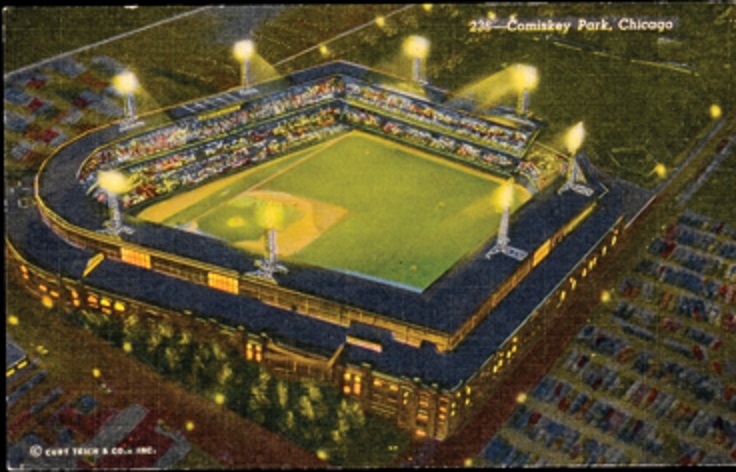
Shibe (later known as Connie Mack Stadium) had the infamous “spite fence” in right field. The ballpark built in 1909 (one year prior to Chicago's Comiskey Park) originally had a 12-foot-high wall in right field, with a residential street and apartments beyond it.

BUT WHEN THE Philadelphia Athletics got offended at the number of people not paying to watch ballgames, they added height in 1935 – turning the wall into a 34-foot-high barricade.

Which Philly fans argued was done purely out of spite – as though they had a right to view games for free. Just think if this issue was something that someone had felt compelled to file a lawsuit about. What if the courts had felt compelled to get involved?

Are the Wrigley video boards a 21st Century equivalent of the spite fence? Are they a part of the ballpark’s new character?

And should we be more concerned about the court feeling compelled to give power to political people who may be too eager to erase from the voter rolls people who might not vote the “right” way on Election Day?

  -30-

Friday, October 2, 2015

Why does the modern ballpark feel more like a giant TV viewing room?

The ambiance of attending a ballgame in person (rather than viewing it on television, like so many people do these days) is no longer about the sight of so much green grass mowed ever so perfect, or the smell of the concessions wafting out toward the field.

Do we really need to see Sox rally-killing double plays so large? Image by Illinois Sports Facilities Authority
It seems to be more and more about the video boards that stadiums seem to think are the keys to the success of the facilities in which they actually play their games.

ANYBODY WHO DOUBTS this ought to consider a couple of actions that occurred this week in Chicago with regards to the facilities used by our city’s two professional ball clubs.

A U.S. District judge issued an order that rejected the lawsuit filed by owners of apartment buildings across the street from Wrigley Field – the one that challenged the legality of the video boards the ball club erected for 2015 and for seasons to come.

Meanwhile, the Illinois Sports Facilities Authority gave its approval to a new set of video boards for U.S. Cellular Field. The center field scoreboard with its iconic pinwheels (copied from the old Comiskey Park) will literally become a video board, with additional boards erected beyond left and right fields.

Beginning with 2016, people attending White Sox games will get to see a more grandiose display of video replays – in case you missed the sight of Adam LaRoche striking out, you can see it over and over and over again.

THE SAME WILL be in place at Wrigley, as the legitimacy of those video boards that block out the views from the rooftops of the apartments across the street from the outfield was approved.

Personally, I could care less. One of the reasons I actually enjoyed the last ballgame I went to this season (back when the Yankees came to town) was that I was in a centerfield seat with my back to the video boards.


The old ambiance of Sox and Cubs parks ...
They weren’t the distraction that day that they can often be. Yes, I’d actually rather watch the activity on the playing field – or on occasion check out the activity in the bullpens to see which relief pitchers are trying to catch a little nap before playing.

Although I suspect there are others who could care less, and probably enjoy the video-laced atmosphere, along with the ballplayers having their own personal “theme music” (usually some heavy-metal guitar riff or rap music tune). Maybe it’s not real until it has been on video?

... are definitely things of the past
UNLESS THE CHICAGO Cubs really are destined to go on and on to win the World Series (rather than just being one-and-done against the Pittsburgh Pirates), it could be that these video board announcements will be the highlights of this year for Chicago baseball.

I couldn’t help but be amused by the Crain’s Chicago Business report about the U.S. Cellular video boards, which included the fact that the state was obligated to upgrade the video boards because the current boards at the ballpark are now considered antiquated compared to what other stadiums have.

The White Sox’ lease with Illinois requires the building to be maintained to “major league” standards. I can already hear the people complain about the state wasting money that could have been put to use elsewhere.

Although that lease (with all its perks to the ball club) is what ensures the White Sox remain a viable financial entity and keeps Chicago’s status as a two-team town – rather than becoming like St. Louis, Philadelphia or Boston.

AS FOR THE Cubs, I have to confess some praise for Judge Virginia Kendall and her ruling that tossed out the lawsuits brought by those apartment owners who tried to bolster their own financial bottom-line by turning their rooftops into private clubs (with people paying anywhere from $90-150 a seat) to view ballgames.
 
Excuse me for not sympathizing for those rooftop club owners whose views are now permanently blocked. Image provided by Chicago Cubs
I’m old enough to remember the days when the sight of people sitting on the rooftops added to the ballpark’s character – in part because being allowed to go up on the roofs was a perk of actually living in the building. Outsiders were verboten!

For a building that likes to promote the idea that it has the same character as when it originally opened in 1914 (and where the Cubs will celebrate a century of activity come next year), those rooftop clubs are so garish and un-historic.

Just as tacky, perhaps, as the new video board for U.S. Cellular – and so unlike anything that Bill Veeck had in mind when he had the original exploding scoreboard put in place at Comiskey Park (or, for that matter, the ivy on the walls at Wrigley).

  -30-