Showing posts with label conflicts. Show all posts

Friday, April 13, 2018

Ill. budget “brawl” likely to get ugly

I remember back when I was still in college, trying to gain some experience that might make me a reporter-type person someday when an editor told me the very definition of “news” is wherever there is conflict. People in agreement about things just aren’t very newsworthy.
Madigan seems determined to continue ...

If that’s the case, we’re in for a significant scrap in coming months – because I can see massive conflict occurring within state government.

GOV. BRUCE RAUNER met Thursday with the General Assembly’s leadership, and Illinois House Speaker Michael Madigan, D-Chicago, made it clear he’s not about to meekly cower in the governor’s presence just to get a budget put together.

With regard to the Illinois government budget being put together for the state’s 2019 fiscal year (which begins July 1), Rauner earlier this week made a point of talking of the need for the state to have a balanced budget, while also implying that the problem was the Democratic majorities that run the General Assembly.

They’re not doing what Rauner wants of them. They are to blame for any inability of state officials to put together a budget before the state Legislature’s scheduled adjournment come the end of May.

Which led to Madigan issuing his own statement following the Thursday morning session – one in which he attempted to shift back blame to the governor.

AS THE ESTEEMED (some sarcasm intended) “Mr. Speaker” said, “If the governor’s agenda is to push more of his extreme cuts to health care, senior services and resources for our most at-risk residents, or if he again intends to move the goalposts and create chaos, he should stay on the sidelines and allow serious leaders to continue working cooperatively to address the challenges facing our state.”

Because I don’t expect Rauner to put himself on the sidelines during budget negotiations that are taking place in coming weeks between the Democratic and Republican leadership of the Illinois House of Representatives and the state Senate.

For one thing, Republican leadership wouldn’t allow it.
... the political brawl Rauner brought on

They’re not going to meekly go along with whatever kind of orders Rauner tries to bark out at them.

RAUNER’S OWN POPULARITY ratings have dwindled (26 percent approval, and 60 percent disapproval – the worst of any governor seeking re-election this year, according to the Morning Consult group’s latest study) to the point where I suspect many GOP legislators don’t want the governor taking them down to defeat along with him come the Nov. 6 elections.

While many Democratic officials counting on the Donald Trump unpopularity factor aren’t about to do anything to appear to be caving in to Rauner on anything.

Budget talks are going to be downright ugly – and likely to accomplish little of anything significant. Because both sides seem to be more interested in one-upping each other.

If you think about it, Madigan’s comment about, “if the governor is finally ready to accept responsibility for the management of this state and be an honest partner in trying to pass a budget, we welcome him to this process” is about as snide and sarcastic as Rauner earlier this week saying he was fighting against, “a corrupt machine of self-dealing, unethical behavior … that benefit a few against the people.”

WHICH MAKES IT ironic that Rauner wants us all to think his four-year term as governor has been about “reform.”

When the reality is Rauner has behaved in as an obstructionist a manner as any other official within Illinois government has ever done. Meaning that obstructionism in the name of partisan politics is very much a part of the “Way things are done” in Illinois.
Is Pritzker our 'savior' by default?

Although going for so much of the four years of his term without a balanced budget in place will leave the Rauner Years with quite a legacy – particularly if he insists on finishing out his time in office without a budget in place for fiscal 2019.

It will be enough to make all of us eager for Election Day so we can pick a replacement to live and work in the (newly-renamed) Governor’s Mansion.

  -30-

Tuesday, August 6, 2013

A new twist to an old tale – when ball clubs get too close to news coverage

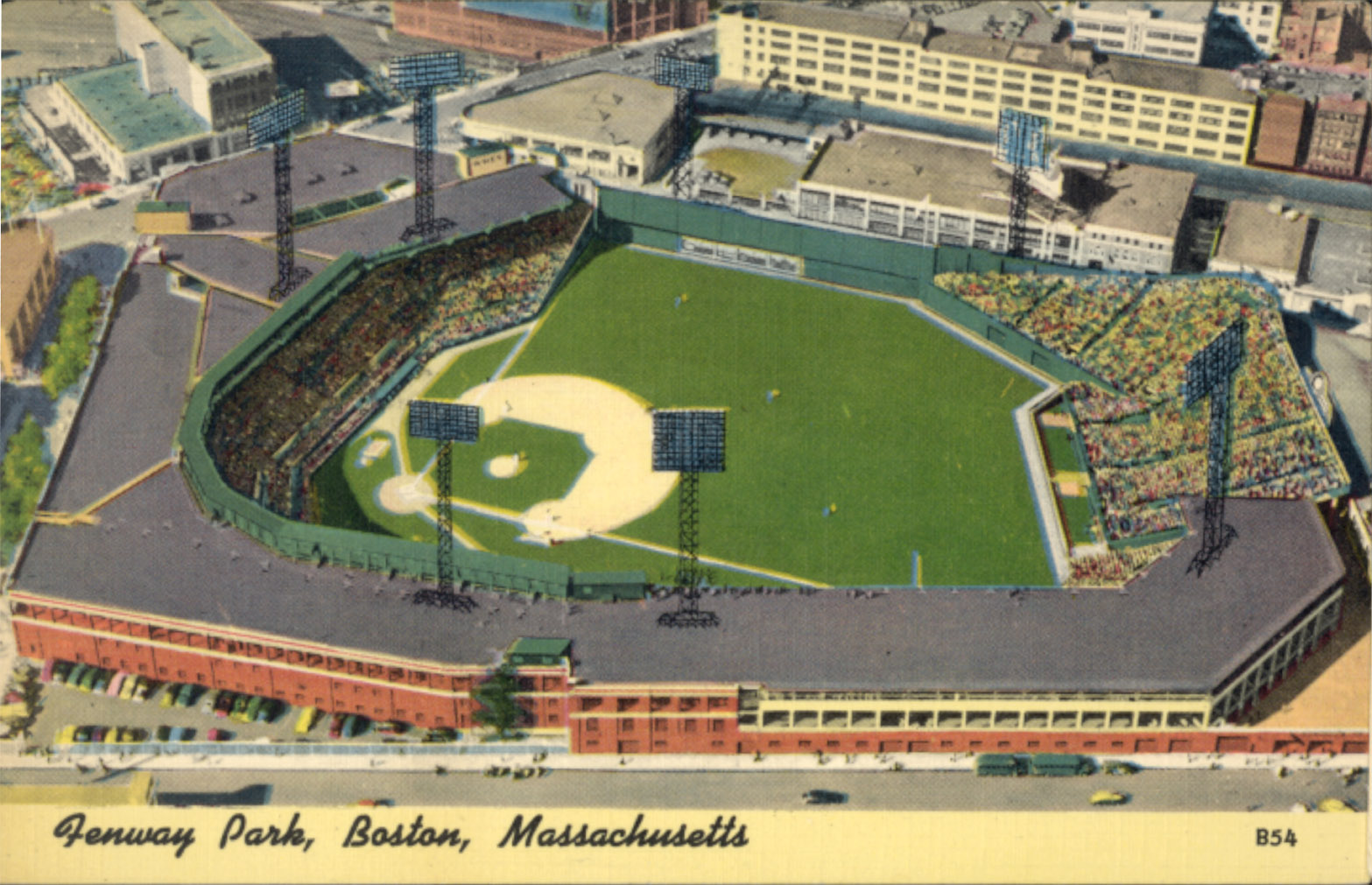
The Boston Globe newspaper has new ownership – it became known this past weekend that the group that controls the Boston Red Sox baseball team is going to spend $70 million or so to purchase the newspaper, its assets and a sister newspaper in the suburbs.

Now some have tried to make much of the fact that when the New York Times bought the Boston Globe, they paid $1.1 billion. Or the fact that the Washington Post on Monday was sold for $250 million. The sale price is significantly less.

ALTHOUGH THAT ANGLE doesn’t intrigue me as much as the idea of just who actually bought the paper. Professional sports and news coverage have always been intertwined, and not just in Boston.

Here in Chicago, we had the ultimate combination of the two entities for the nearly three decades that Tribune Co. included among its assets the Chicago Cubs.

We had many decades worth of conspiracy theories about how the Chicago Tribune tailored its news coverage to bolster the Cubbie-blue image, thereby making it more attractive as a broadcast property carried over Tribune-owned television and radio stations.

A true combination of interests that was appalling to anyone who cared less about the Cubs!

IT’S NOT UNIQUE. Let’s not forget how Ted Turner turned his local Atlanta television station into a cable television powerhouse by carrying Atlanta Braves baseball – making it possible for people who didn’t live near any major league market to be able to watch Major League Baseball games on a regular basis.

And let’s not forget how Rupert Murdoch tried to bolster Fox broadcasting interests with a stint owning the Los Angeles Dodgers.

So the Globe and the Red Sox being business partners? This one is a little different. Because in this case, the ball club is going to be the dominant partner.

Instead of a case where a media property is hoping to bolster itself and its programming options by operating a baseball club, this is a case where a baseball club is going to have say over the coverage that it gets.

IS THE BOSTON Globe about to become a butt-kissing rag for the Red Sox that lives up to the worst conspiracy theories that Chicago White Sox fans have always held about the Chicago Tribune?

The new HQ of the Boston Globe?
I’d hate to think so. Because that is a situation where nobody would benefit. It can only be hoped that the new Globe owners view themselves as Boston people wanting to benefit their community to the point where they see their two business properties as being separate entities.

Because a news reporting property has more to it than a sports section, and it would be pathetic if people wanting to know more about Boston would have to turn to the Boston Herald for a more honest view of what happened in the world – considering that the Herald has its own ideological hang-ups it wishes to live up to.

I have always suspected that the decline of the newspaper medium was going to have consequences that would not be appreciated until it was too late to do anything about it. Many people just don’t comprehend how much the newspaper medium is the one that picks up on stories and does research that gets picked up by news programs on so many broadcast and Internet mediums.

AND WHILE I comprehend that a new generation exists that wants information presented to them on their assorted gadgets rather than the printed page, there are still assets of a newspaper that can be converted over to other information-based mediums.


Globe has headaches no longer at Tribune
The Globe has its benefits, and a $70 million price tag could turn out to be quite a bargain – if they are managed properly. But turning the newspaper into an entity that merely promotes the Red Sox could be what further speeds up the decline of the Globe.

Watching the Chicago media scene all these years, I am convinced that many Tribune people tried to avoid conflicts during that period when the paper was a business partner with the Cubs. But there were many moments when conflicts just couldn’t be avoided, and the paper came off looking ridiculous.

The Red Sox owners haven’t said what they plan to do with the Globe. Let’s hope they don’t bring ridiculous moments upon themselves on purpose.

  -30-

Tuesday, July 23, 2013

What attorney who’s worth anything doesn’t have a conflict of interest?

As I write this, I can hear the moans and groans of those individuals who as recently as a few days ago were convinced that they finally had that crook, otherwise known as “Mr. Speaker,” just where they wanted him.

MADIGAN: Breathing easier
Seriously, I came across several comments on the Internet (all anonymous) Thursday and Friday that had as their theme the idea that former federal prosecutor Patrick Collins was going to be the guy who – after all these decades – would catch Illinois House Speaker Michael J. Madigan, D-Chicago, in some sort of act that would send him off to a federal prison.

NOT THAT ANY of these people had a clue what this illegal act would turn out to be. In fact, I sense for them what ought to be “illegal” about Madigan is that he has the “D” after his name, instead of an “R.”

But they want him, by any means necessary. And Collins is the guy who gets credit for putting former Gov. George Ryan in prison for all those years.

So how disappointed the ideologues likely are because Collins on Monday said he’s not available to do any investigation of Metra and its former CEO – who allegedly engaged in assorted political hiring and other inappropriate behavior; some of which was supposedly done at the request of Madigan.

I will be the first to admit that I don’t know anything specifically about this particular investigation – other than that Collins was supposedly going to be involved.

BUT COLLINS’ LAW firm, Perkins Coie, let it be known Sunday that it has a “potential conflict” in being involved with this case, and that Collins himself is not available to be involved in this matter.

The Chicago Tribune reported Monday that an initial check on Collins showed no problems, but that the law firm later learned of “additional conflict issues.” Which is purposefully vague.

COLLINS: Stepping aside voluntarily
The fact that Collins won’t be involved in the case, after all, means he will be able to get away without telling us what the potential problem was.

But it does mean that the “investigation” into Metra and former CEO Alex Clifford is going to have to wait until an attorney can be found who is capable of conducting an investigation without there being some perception that he (or she) is biased in favor of Madigan or Metra.

WHICH COULD TURN out to be difficult.

One of the issues involved is that Madigan has been involved in the Springfield political and Chicago legal communities for so long that it is hard to envision anybody who would be absolutely neutral whenever his name comes up. The idea of a completely-nonpartisan investigator may not be possible.

Take into account the case involving Richard “R.J.” Vanecko; the nephew of former Mayor Richard M. Daley and also of Democratic gubernatorial hopeful William Daley.

Remember how his criminal case was originally assigned to Judge Arthur Hill – who voluntarily backed away because he admitted his legal career owed significant ties to Richard M. back when he was the Cook County state’s attorney?

OFFICIALS SOUGHT OUT a judge from outside of Cook County, and Maureen McIntyre of McHenry County ultimately got assigned to the case. She remains on it, even though the Chicago Sun-Times came up with a batch of allegations concerning she and her ex-husband that makes her appear to be less-than-ideal.

If anything, we tend to have a legal system that gives us “justice” despite the characteristics of the individuals who work in the system.

Which is why Madigan may be able to breathe a bit easier these days concerning this Metra stuff. It may well turn out that any future attorney who gets dragged into conducting this investigation is going to be scrutinized so intensely (that’s “scrootened,” in former Mayor Daley speak) that they may decide the duties aren’t worth the hassle.

  -30-

Wednesday, December 12, 2012

As close to ‘goo-goo style’ government as we’re ever likely to get in Chicago?

The Criminal Courts building -- nine decades and counting of giving us criminal justice, Chicago-style

Call it a plus, if you will. Because I’m actually encouraged with the legal process thus far for Richard Vanecko – the Mayor Daley nephew (and grandson) who now faces criminal charges in the 2004 death of another man.

By the legal process, I’m talking about since the point when Vanecko was actually arrested and has to face the process by which alleged criminal acts are adjudicated.

FOR VANECKO THIS week faced arraignment. That’s the part of the legal process in which a defendant is asked by a judge, “How do you plead?”

And he responds, “Not guilty, your honor.” Then, he gets assigned to a trial judge who will be the one who has to oversee his case for the next year or two (or however long it takes the attorneys for both sides to prepare for this trial).

Note he pleads “not guilty.” At this stage, he has no alternative. If at some point in the future, he wishes to change that to a “guilty” plea, he can do so. But what happened this week was about assigning Vanecko’s case to a judge for eventual trial.

And that is where I see the plus in this case.

FOR THE VANECKO case was assigned to Associate Judge Arthur Hill, Jr. – who has been a judge for nearly a decade following a career in the Cook County state’s attorney’s office.

Which is a typical career path for the men and women who wear those black robes and preside over cases at the Criminal Courts Building.

But what makes this case unique, and encouraging, is the fact that when Hill presided over his first hearing in the Vanecko case, he felt compelled to recite his professional record in law enforcement.

Which involved being hired as an assistant state’s attorney back in the days of Richard M. Daley as head prosecutor for Cook County.

AND WHEN DALEY eventually became mayor, Hill got one of his few non-criminal law positions in his career – he served a stint on the Chicago Transit Authority board. He was a Daley appointee.

And Hill definitely didn’t have any objections from Daley when he became a judge in 2003.

In short, Judge Hill is a Rich Daley ally.

To the point where he said publicly in his courtroom, “if the lawyers want me to step aside, I will.” Even though he also said he thinks he can be “fair and impartial” in deciding whether or not Vanecko’s behavior in the death of David Koschman rises to the level of a criminal conviction.

IN THE OLD days, it likely wouldn’t have been brought up. It would have just been presumed that a mayoral family member in trouble would get a break from the judge.

For Richard J. Daley was of the belief that judges were political positions just as much as any other. The idea that a judge should think himself above politics would have been absurd to him. He always made it clear he didn’t think much of reform efforts that thought judges should be appointed based on some high-minded appeal to legal ideals.

Let the people decide! So long as they pick the “right” candidates like they do for every other office.

The idea that Hill would acknowledge that there might be reason for him to step aside shows we have advanced in a certain sense.

NOT THAT IT’S a guarantee that Hill will be forced off of this case. For there’s no guarantee that any other judge would be more impartial.

Call it the drawback of having Richard M. Daley serve just over three decades as state’s attorney and mayor – he has a lot of contacts. There’s hardly anyone who can’t be perceived as having a Daley bias.

And as for those who believe that we ought to pick a judge from outside the area to come into this case (just as a special prosecutor – former U.S. Attorney Dan Webb – has already been named), I’d wonder if it might bring in some bias against the city.

Some rural judge thinking he can appeal to his people back home by “putting away” the mayoral nephew – regardless of the legal merits of the case.

BACK IN THE days of Operation Greylord (a federal investigation of judicial corruption), some Southern Illinois judges were brought in to oversee the criminal cases. But the partisanship based on regionalism has become all the more intense in recent years.

That is why I’m wondering if a judge willing to admit his potential for bias IS the best we’re going to get in this particular case – which is going to linger with us for so long that we’re likely to be sick of it by the time it actually makes it to trial.

  -30-