Showing posts with label education. Show all posts

Tuesday, June 25, 2019

Could college tuition make 25-candidate campaign instead nothing more than a Warren/Sanders brawl?

We’re up to 25 people with delusions that they’re the one capable of running for president as the Democratic Party’s nominee, with most would-be voters dreaming that everybody else is going to come to their senses and drop out – rather than run against their preferred candidate.
SANDERS: Writing off student loans

But just will be the factor that causes many of these political dreamers to “give it up” to take the advice of comedian Samantha Bee and run instead for the U.S. Senate – instead of for the post that offers up a mansion and private airplane as being amongst its perks?

A PART OF me wonders if Bernie Sanders and Elizabeth Warren – the senators from Vermont and Massachusetts, respectively – have latched onto the idea that will sway would-be Democratic voters into making this a two-way campaign between them.

While pushing everybody else off to the political sidelines.

For Sanders and Warren are the two who have tried most to make an issue out of a college education becoming more affordable.

Warren has talked about tuition being free at public colleges. While Sanders is now going further in talking about wanting to erase the debt that students incurred in taking out the loans that helped pay their tuition bills.

HIS LINE OF logic is that it benefits no one – and actually defeats the purpose of a better-educated society – if students are perpetually in debt upon graduation.
WARREN: Tuition-free public education?

Writing off all those unpaid loan bills would benefit the students, and actually result in less time being wasted by entities that are trying to collect debts from people who, realistically, can’t afford it.

Personally, I’m not swayed by the idea – largely because I remember back some three decades ago when I was a freshly-graduated university-type scholar.

I managed to repay my loans in full – even though I also made what I’m sure some (such as my father) would regard as the asinine decision to want to be a newspaper reporter. Not exactly the highest-paid of professions we have in our society. 

FURTHERMORE, I SPENT those early-reporter years with the now-defunct City News Bureau of Chicago – a place that actually took a certain amount of pride in the low wages they paid (my memory recalls starting at $190 a week – which dropped down to $156 weekly once taxes were deducted).
O'ROURKE: Can we write-off Beto yet?

Yes, if I hadn’t had to make that monthly loan payment, I’d have had a few extra bucks. But I did make it. And also have to admit it helped that at exactly the point in time I was finished off with the loans – my future employer gave me a significant pay boost.

Which became the point in time when I could start living a more-adult lifestyle. Maybe I could have had a financially-easier time of it had I made other choices, but those were choices I made -- and I paid the cost, without expecting a financial write-off someday.

Now part of the problem, as I comprehend it, is that college costs are significantly-higher now than they were back in the Age of Reagan. When I look at the costs of college that exist now, I wonder if it would be possible to borrow so much money to afford the tab.

BUT A LARGER part of the problem lies in part with those students who, for whatever reason, wind up not completing college – but took out loans to pay for the years they attended.
BEE: Run for Senate, instead

They’re whacked with significant debt without the potential future earnings that a degree would offer them. Note I said “potential.” There’s no guarantee – as it’s usually only the most promising of students who actually wind up employed to the standard of their dreams.

So I expect Sanders will encounter some opposition from those who think “we paid off our loans, let the deadbeats do theirs.” But there also will be others who will think the theory of “free college” outweighs all others, and will be more than willing to ignore all other would-be presidential candidates just because of it.

So maybe it’s beneficial that the number of presidential dreamers on the Democratic side be reduced. Although I can’t help but be dismayed at the notion that it could be something as trivial as this that causes the ranks to be reduced to a more-comprehendible number.

  -30-

Tuesday, June 4, 2019

Will electorate trust Lori Lightfoot to fill city school board vacancies?

I’ve never been amongst those people who think we ought to be putting it up to the Chicago electorate to decide every few years who should be serving on the board of education for the Chicago Public Schools.
del VALLE: New school board president

Yet there are those who have argued incessantly that giving the mayor the authority to make such appointments is far too much power and influence to be entrusting to one individual.

SO I’M GOING to be curious to see what kind of reaction arises to the fact that newly-elected Mayor Lori Lightfoot has gone ahead and made appointments to the school board.

Seven, to be exact, including the pick of one-time city Clerk and state Senator Miguel del Valle to serve as the new school board president.

Who, as somebody who once tried himself running for mayor against Richard M. Daley, has a political reputation of someone who wasn’t exactly a part of the old boys network and was interested in bringing about change.

Which would sort of put him in line with the image the Lightfoot is trying to create for her own term as mayor. Although Lightfoot herself was opposed to the bill that would have created an elected school board for Chicago (just like all the suburbs have), because she thought the bill’s mechanism was too convoluted.

BUT ARE THE people who view Lightfoot as being all about change and shaking everything up going to accept a school board that they didn’t personally pick?

It could be the big issue. Although I don’t have much of a qualm about accepting it – largely because I think it’s absurd to go about expecting voters (many of whom think there already are too many obscure political posts to have to pick people for) to make qualified choices.

I could easily envision an elected school board becoming a lot like all those judicial posts people are asked to make picks for. Many would wind up skipping over the ballot spots, while others would randomly pick people without much of a clue as to who they’re voting for.
LIGHTFOOT: Picks former mayoral challenger

And yes, I’d put into that category the kind of people who say only semi-jokingly that they look for good Irish-sounding names on the ballot; figuring that’s a sound of respectability and experience.

PERSONALLY, I THINK it is nonsense, and there have been times I’ve been spiteful enough to deliberately vote against an Irish-sounding name – just because I figure that candidate will get too many votes from other people.

I did find it interesting that Lightfoot, amongst her school board picks, were people with education backgrounds – instead of what often becomes of school boards. They get filled with people who have electoral ambitions who, for whatever reason, wind up being unable to find any other office for which to run.

And the idea of del Valle in the top post is also intriguing – and not just because I personally have an interest in seeing increased political empowerment of officials with Latino ethnic backgrounds.

I’ll admit that any Spanish-sounding name on a ballot usually gets a second-glance and extra bit of consideration. So the idea of del Valle – once the first head of a Latino caucus in the General Assembly – isn’t exactly the most outrageous pick that a mayor could make to be in charge of the school board.

WOULD HE HAVE had a chance of getting the post if it had been up to voters making picks on the ballot?
EMANUEL: Would he have ever appointed del Valle?

I don’t know. I suppose he might have, IF the political bosses who put together candidate slates would have seen a benefit to themselves to having del Valle be in the running for the post.

But this may have been an example of how we’re better off with the school board members being political appointees. After all, we always can hold the mayor accountable for her picks if they turn out to be poor ones.

Besides, I suspect the desire of many people to have an elected school board will wither away, now that we have a mayor, such as Rahm Emanuel, whom many of them found so objectionable and whom they were eager to diminish in authority to whatever degree was possible.

  -30-

Saturday, May 18, 2019

No more Mayor Rahm-bo?!?

For all practical purposes, the era of Rahm Emanuel as Chicago mayor is over.
EMANUEL: Kaput as of Monday, but will he return?

The transition to the Lightfoot Years comes Monday, so unless Rahm has some sort of “midnight surprise” planned for the weekend, his time being able to do much of anything in municipal office is kaput!

ALL THOSE “HUZZAHS!!!” we’re hearing are from people pleased that we’ve managed to survive the past eight years, and that Emanuel is no more. Or so they think.

Because personally I think it’s wishful thinking to believe that the Era of Rahm is over and that we’ve sent the man packing into political oblivion.

I’ve heard the same political reports of the mayor saying he’ll focus his life back on the business community – for the time being. But I can’t truly envision him a political has-been.

If anything, I won’t be the least bit surprised to learn Emanuel becomes a “behind the scenes” political player who winds up being connected in some form to whichever of the dozens of Democrats with dreams of becoming president in 2020.

THE MAN DID, after all, serve as a significant part of that 2006 effort that shifted the House of Representatives back to Democratic Party control. He did serve as a White House chief of staff under the “beloved’ Barack Obama presidency that many progressive politicos fantasize about returning to in spirit.
TRUMP: Do we despise more than Rahm-bo?

Could it be that many of the same people who are thinking thoughts of “Drop Dead!” at the very thought of Rahm Emanuel’s continued existence will wind up touting the man’s merits (through gnashed teeth, most likely) at the fact he’s likely affiliated with whoever it is they wind up touting for president?

Because it may wind up being that these people of progressive political leanings will despise the notion of “four more years” for Donald Trump far more than they do the thought of Emanuel.

They may wind up coming to appreciate his hard-core political leanings that are willing to play hardball just as much as any Republican ideologue does. Adopting the notion that history only remembers who won an election, and doesn’t care in the least about praising the merits of the good loser.
Can Rahm turn unknown Dem into 2020 winner?

OF COURSE, THERE were those people who always despised the notion of Emanuel as mayor – maybe because they’d rather be the loser with a so-called sense of morals who can then blame the opposition politicos for running roughshod over everything they desire for our society.

Looking back on commentaries I wrote back in those days of 2011 when Emanuel beat three other mayoral hopefuls to avoid having a run-off election, what catches my attention was the notion that Emanuel would be the mayoral hopeful who placed the business interests of downtown first.

Not all that different from the days of the Mayor Daley eras (both elder and younger), if you think about it. So perhaps we shouldn’t be the least bit shocked by the way the Emanuel era turned out.

For those who still rant about the way Emanuel early on oversaw the closing of public schools in predominantly black or Latino neighborhoods, the reality is that many of those schools were failing their students. You can say Rahm didn’t do enough to replace them, but we’d be worse off if many of those schools were still lingering in existence – providing inadequate services for the students stuck there because of a lack of alternatives.

THEN, THERE’S THE key issue that I’m sure upsets people – the relations between police and the African-American segment of Chicago. As evidenced by the 2014 shooting death of a teenager that took more than four years to finally get a case to trial – and resulted in a police officer getting a minimal penalty.
LIGHTFOOT: Her era begins Monday at noon

Although to some, even that three-plus year jail sentence is too harsh. But for others, the injustice is that it wasn’t Emanuel himself who had to suffer some punishment.

I don’t doubt that the same people who were pushing for a 90-something-year prison term for Chicago cop Jason Van Dyke are also the ones who would have wanted Emanuel to suffer an indignity – rather than being able to walk away from office with his political win streak intact.

A streak that I really believe will be put to the test by those people eager to Dump Trump next year. We may have to decide just which character do we despise more – and will we have to put aside our contempt for Rahm if it achieves a “greater” good.

  -30-

Monday, June 4, 2018

Dissection debate; an ongoing issue

Learning about the dinky protest that took place outside of a high school district in suburban Highland Park couldn’t help but remind me of my own school years – particularly that moment when I was called upon to cut up a frog.

I don't recall a tongue being so prominent on our frog
Dissection – as in that so-called tradition of an assignment in which we use a scalpel to cut through the outer flesh so that we can peel it back and see, for ourselves, the inside of a living creature.

ACTUALLY, THE INSIDE of a creature that once was alive. These frogs were all dead and preserved in a chemical meant to keep them from decomposing. They were purchased from a company that provided these frog carcasses to school districts just for this very purpose.

I remember being called upon to identify all the inner organs and even take a crack at drawing pictures of what was inside my particular frog. And yes, the thought of having to handle the inner parts of a frog did make me squeamish.

Which is why, in a sense, I got lucky. My particular junior high school had a budget and the frogs were rationed out to us so that every two students had to share one.

In my case, I was partnered up with a guy who was of the sort that he wasn’t the least bit squeamish. He insisted on doing all the cutting himself.

I SUSPECT THAT if I had tried to pick up the scalpel, he would have smacked it out of my hand, then used it to cut me open.

Basically, he handled the cutting, while I wound up drawing all the pictures of what we saw inside – which I recall as being a fairly nondescript sight. I’m not sure how much I really learned about the inner workings of a living being by seeing the guts of this particular frog.

So there’s a part of me that sympathizes with the People for the Ethical Treatment of Animals – the group that was behind the picketing that took place in the northern suburbs on Friday.

Protesters said dissection is “horrific and unnecessary” and a PETA official told the Chicago Tribune that, “With all the violence in the U.S., it is important we teach children compassion for all living beings.”

I’LL BE HONEST, I didn’t realize students were still doing dissection with any regularity. I thought it was something reserved for the most advanced classes where the end results were expected to be more detailed than the crude drawings I once did of a frog’s innards.

I have often heard of the computer programs that allow a person to “virtually” cut open a “frog” and see what the insides look like.

Which fits in with the modern concept of using technology in the classrooms and makes kids comfortable with computers in ways that older generations often aren’t, and never will be.

Although I’ve always been skeptical of such use, wondering if we’re creating a generation of people who think the computer is significant, instead of the tasks that you’re using it to do.

SO IN THAT regard, perhaps you need a real frog (albeit one whose life wasn’t all that pleasant before dying and becoming something for use in a biology classroom) to gain an educational experience.

Although perhaps there need to be elements of teaching about what the living creature went through during its life. So as to perhaps sway the thoughts of my one-time lab partner who just couldn’t want to cut open a frog’s belly.

One thing I do remember from that junior high dissection session – many of us in class were envious of the fellow student who, upon cutting open her frog, found that it had many bugs inside of it that remained undigested. This particular frog died with a full belly.

As for my frog, he must have died hungry. I found nothing inside, and there was little that was the least bit unique about the experience.

  -30-

Wednesday, May 23, 2018

What did police academy protesters accomplish with their screams?

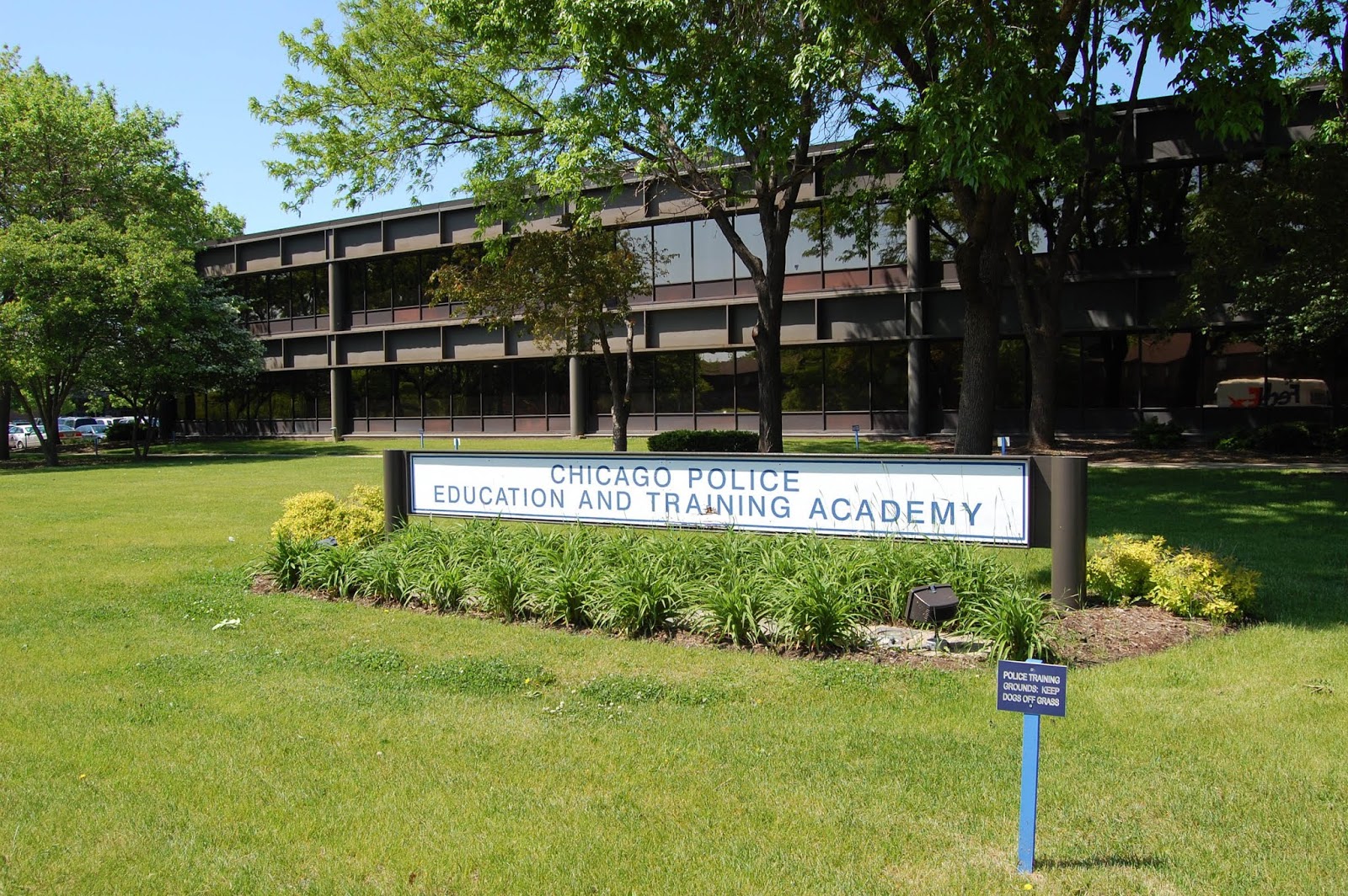
I couldn’t help but be amused, yet also a bit embarrassed, by the reports of a City Council committee on Tuesday giving its support towards construction of a new policy academy facility in West Garfield Park.

Police Dept. would like to have new academy facility
The council’s Budget Committee heard from a raucous batch of protesters, many of whom were of the mentality that anything done on behalf of the Police Department was a waste of time and funds.

THE MORE HIGH-minded of them talked of how the measures being used to raise money for a training center, that also would be used by the Fire Department, would be better put to use to come up with more money for mental health and public education programs.

While others just talked of their distaste for the police.

Not that any committee members were swayed by such talk. The Chicago Sun-Times reported how once the protesters were removed from the room where the committee session was being held, the vote was taken and aldermen gave their support for the plan.

Specifically, aldermen backed a measure that would take some $20 million raised from the sale of a fleet maintenance facility on the North Side of Chicago and put it towards the $95 million cost of the training facility for police and fire.

WHICH WHEN COMBINED with the sale of air rights over an existing fire station and the sale of the current police and fire training facilities is expected to produce much of the money needed for the project.

A part of me wonders how many of the aldermanic types who cast votes Tuesday were emboldened in their attitudes against the people who oppose the police academy project.
,
Police dream of this new training facility, ...

Did the raucous behavior wind up strengthening support for the project that some activist-types were trying to say ought to be put somewhere else because they don’t want it in their neighborhood?

Humorous if viewed from the notion that the activists undercut their own argument with their rude behavior. But embarrassing if we view it as politicians being shallow enough to cast a vote out of spite.

ODDLY ENOUGH, THE one argument that didn’t seem to concern many was the notion that the $95 million needed for the new facility isn’t completely covered. The Sun-Times reported that city officials are about $37 million short of covering the tab.

Are people really that convinced city officials are capable of coming up with the cash? City officials say they’ll work with the Chicago Infrastructure Trust to close the funding gap – even though they admit it may involve the city itself having to sell (and repay) bonds to raise the money.

Which would mean taking on some long-term debt.

Not exactly the ideal solution for a city that has other financial problems to address and would prefer to take on as little debt as possible.

PERSONALLY, I DON’T have a problem with the police and fire departments for Chicago taking actions to improve the quality of training they provide to their officers. Such training could result in better-qualified cops and firefighters, thereby improving our public safety.
... replacing the current one on West Side. Images provided by city of Chicago

I’m also skeptical, in general, of people whose argument against something is that they don’t want it built anywhere near themselves. My three-plus decades as a reporter-type person means I have heard it made so many times.

One can always find someone to object to location. If that line of logic were allowed to prevail, nothing would ever get done with regards to any issue or project. In short, Chicago would go nowhere. That isn’t what anybody ought to desire.

But I don’t doubt that the people who got escorted out of a council committee hearing on Tuesday just before approval was given are going to feel particularly spurned. Which also is likely to make their future arguments against the project all the more intense and angry.

  -30-

Friday, February 23, 2018

Armed school teachers – a warped idea whose time has arrived? Let’s hope not!

As one who follows political debate, one of the realities is that ideas once considered absolutely ludicrous can eventually become a part of law. Which is why people opposing nonsense have to be vigilant and never presume they’ve “won” a fight.
Nonsense image is some peoples' reality

That is the thought popping into my head as I hear the continued debate in the wake of the school shooting in Florida that left 17 dead.

BECAUSE SOME OF the people feeling the need to argue against sensible regulation of firearms are pushing a line of thought that strikes me as blatantly absurd – arming the school teachers.

The premise being that when someone comes into a classroom or other situation in the presence of school children to pose a threat, the teacher can whip out their pistol and kill the s-o-b. Thereby saving children’s lives.

The part that amazes me are those individuals who think this is some new concept – an original idea that must now be imposed for our overall protection.

Which, of course, it isn’t. This idea gets brought up following every incident involving school children; as thought its proponents are hoping we’ll now be inclined to see life in their own loopy way of viewing things.

PERSONALLY, THE FIRST time I ever recall someone suggesting the arming of school children was nearly 30 years ago.

It was following the 1988 incident in the North Shore suburbs involving Laurie Dann, a mentally unstable woman who had her own little rampage that included – at one point – entering an elementary school classroom while armed with a pistol.

The crackpots of three decades ago argued that Dann’s rampage could have been brought to a quicker end if the teacher had been armed and merely shot her dead.
Armed faculty idea as old as Laurie Dann

Actually, the teacher in that particular incident did try to defend her students, and in fact managed to disarm Dann of one of her weapons – which may have lessened the eventual body count (one dead, five wounded). The idea of a gunfight involving a teacher wasn’t necessary.

PERSONALLY, I WISH I hadn’t had to recall the Dann debacle – which later was found to include attempts to poison people across the North Shore. She was a mentally disturbed person in her own right.

Although I wonder if the people who seriously talk about wanting to provide school teachers with firearms are even more twisted.

That includes President Donald J. Trump, who this week said he would want teachers with military or special training backgrounds to be armed and prepared to shoot back in such incidents.

I think all that would accomplish is having even more bullets flying through the air in a crisis situation – and the likelihood that one of the teacher’s stray bullets would wind up taking out a student.

TRUMP TRIES ARGUING that “sicko shooters” would be deterred from attacking school situations because they’re “cowards.”

I’d argue that anybody inclined to bring a firearm into such a situation most likely is mentally unstable and isn’t going to be deterred by anything or anyone. Which means they’re situations where the “cowboy” mentality is the one most likely to cause a situation to escalate into a bloodbath.
TRUMP: Probably thinks he originated idea

But this idea is one that doesn’t seem to want to go away. The knuckleheads amongst the ideologues in our society seem determined to cling to this concept of a pistol-packing school teacher hoping the day comes when they’ll be capable of pushing it through from a fantasy into reality.

Those of us with sense need to maintain a vigilance against the idea; if we’re going to truly maintain a semblance of a safe and sane society.

  -30-

Thursday, December 14, 2017

EXTRA: School district consolidation? Those are fightin’ words to many!

Republican gubernatorial challenger Jeanne Ives, the state senator from Wheaton, is most likely trying to appeal to people from mid-sized communities that think they’re the ideal we all ought to follow, and that Chicago is just too damned big on so many levels.
IVES: Ed talk not thoroughly thought out

But I wonder if Ives has any idea how many people she’s going to tick off across Illinois with her latest talk about how school districts should be consolidated.

THE DAILY HERALD suburban newspaper reported how Ives said this week that we have too many school districts. She wants communities to merge their elementary and high school districts into one unit, and for those school districts in rural communities with the tiny graduating classes to consider merging into one with other area entities.

Meanwhile, she’s spouting off a routine claim about the Chicago Public Schools – it’s too big. It ought to be broken up into several smaller school districts.

What it basically amounts to is that Ives has the vision based off what exists in her home community that she thinks everybody in the state of Illinois ought to be obligated to follow.

Which is odd since one of the mantras of Republican dogma is the idea of local control. Local people know best what works for their communities.

SHE DOESN’T SEEM to be a strong believer in such ideals, if she’s really talking about this.

Because the reality for many of those rural communities that have tiny school districts because the overall population is small is that the school district often is the pride of the community, Something they tout as a sign of their individuality and independence.

Does Ives really want to be the candidate who tells certain communities they’re not important enough to have their own school district? Not if she really expects to get the votes of all those rural residents who are disgusted with the performance of Gov. Bruce Rauner!

As for Chicago, wanting to tamper with the Public Schools’ overall structure is just the usual nonsense-talk from someone who thinks they can undermine the schools’ influence by breaking it down further.

I’D EXPECT THAT schools officials across Illinois will now look skeptically at Ives’ candidacy for governor. She’s the one who would threaten to put many of them out-of-work.

It would be similar to those people who think that across the Chicago suburbs, there’s really no need for every single municipality to have its own police department. Let the county sheriff have authority over those communities.

Yet for a lot of suburban public officials, the one bit of significant authority they have is being able to hire (and fire) their own police chief. That’s something they would resist vociferously.

I suspect that a schools’ structure brawl has the potential to create an equal stink. One that I’m sure the Ives campaign would regret bringing upon itself should the issue actually catch on.

  -30-

Friday, October 27, 2017

Why does cursive vs. typing have to be seen as an all-or-nothing proposition?

I have teenaged nephews and nieces (high school senior and freshman, respectively) who are, by a certain standard, functionally illiterate.
Alien alphabet? Or poor penmanship?

As in whenever they’re confronted by something written in cursive, they complain it is unreadable to them. They’ll throw back such notes and insist they be read aloud to them – while also berating the people who bothered to write something out by hand.

I HAVE HEARD from my niece Meira and my nephew Tyler that nobody ever bothered to teach them to write things out long-hand, meaning that when they do write something, it is in printing that – quite frankly – isn’t all that neat or legible.

The experience I had by which the first grade was learning to print the alphabet and the second grade was for learning to write out long-hand in cursive? It seems to be long-gone from our educational programs – and a haughty attitude has developed in our society against teaching people how to comprehend anything.

The so-called logic is that people just don’t write anything anymore. The era of scrawling out notes is over. Everything is typed. Students are supposedly getting high-tech educations that incorporate devices that require them to use keyboards.

It reminds me of that scene from the Star Trek film “The Voyage Home,” when the Enterprise crew travels back in time from the 23rd Century to our modern-day San Francisco. Actor James Doohan’s “Mr. Scott” character tries speaking to a computer, only to have its keyboard pointed out to him.

“HOW QUAINT,” HE quipped, at the very concept of typing.
Typing 'quaint?' Saving the future through cursive?

Which seems to be the attitude we have encouraged amongst our young when it comes to the idea of writing something out. Even when they try writing by hand, it often is on some sort of electronic screen that stores their notes – without them ever actually being scrawled on paper.

A concept I (as a reporter-type person always keep paper notebooks and pens on hand) certainly don’t see as an improvement, by any means.

Now I’m sure some people are dismissing this commentary as the rants of an old crank – just as they think my lack of interest in this year’s World Series between two National League-feel teams (I’m a hard-core American League sympathizer) is proof that I’m living in the past.

IT’S JUST THAT I really don’t comprehend why people are incapable of writing by cursive – and learning the proper way to use a “QWERTY”-style keyboard. I know in the case of my nephew and niece, they plod along with the hunt-and-peck of a couple of fingers.

That may be usable when typing out a text message on a cellphone, but means that even when typing, they’re barely functional. Apparently, they’re not taking the equivalent of the one-year course I had in high school on typing – and the proper use of the keyboard.

It also produces a lack of feeling for the language. Have you ever checked out the spelling (or lack of) that many of these young people have? Which many of them also feel is something the rest of us need to get over!

All in all, it’s a part of the dumbing down of our society. And yes, I write that knowing my teenage niece is a potential honor student who can’t spell for squat. I know because I often have tried to help by typing for her the papers she wrote out long-hand for school.

I BRING THIS issue up because the Illinois House of Representatives this week acted on a bill that would require all schools across the state to teach cursive writing.
Up to Ill. to set state education policy

Gov. Bruce Rauner used his “veto” power to reject the bill the General Assembly approved earlier this year, so the Illinois House voted to override him. The state Senate is likely to follow suit when the Legislature reconvenes next month to complete the veto session.

I’m sure that some will claim our state’s Democratic-controlled Legislature is playing petty partisan politics against our Republican governor.

But if it means that future generations of young people don’t come off as confused by cursive as my niece and nephew’s generation (it may be too late for them), then that would be a plus for our society.

  -30-

Tuesday, July 25, 2017

Here we go again playing Blame Game

It took Gov. Bruce Rauner about one hour following his drop-dead date threat of Noon on Monday to issue the order saying the General Assembly will have to return to Springfield on Wednesday and remain until they follow his demands.
Not happy unless there's infighting?

Those demands are to allow him to put his grubby paws all over the education funding bill that he's made it clear he hates, and wants to alter through his amendatory veto powers – something the General Assembly most certainly doesn’t want to have done.

RAUNER LAST WEEK set the Monday at Noon deadline, with the threats that there’d be a special session of the Legislature called to force them into action.

Monday morning, he said such session would begin Wednesday and could run through July 31 if legislators don’t act promptly.

Not that I don’t doubt Rauner was sincere in his threats. It’s just that they seem so ridiculous.

Because as we saw during the end-of-June special session mandated by the governor over the budget dispute, just because Rauner orders their presence in Springfield doesn’t mean that anything will get done.

HECK, EVEN AFTER the sides reached agreement (over Rauner’s objections) on the budget, the final action still had to wait a couple of days because not enough legislators were present for them to legally do any government business.

So the idea that something will happen by July 31 just because Rauner says it must? Hah! That’s such a laughable notion.

The fact is that Rauner wants alterations to the proposal for education funding spending because he officially claims it gives too much to the Chicago Public Schools – particularly in the aid it provides to help cover costs of pensions for retired school teachers from the city.
Are they really at fault?

Not that I think he really cares much about any such inequity. He’s playing the typical urban vs. rural game of Illinois politics, going around to rural communities and claiming he’s merely trying to keep Chicago from taking too much. Implying they’d get a little extra in funding if he succeeds.

THAT MAY GET him a few extra votes come Nov. 6, 2018 when he seeks re-election. But it will also harden the desire of Chicago voters to dump his sorry behind come next year’s Election Day.

Although one has to admit the touch of politicking being played by Democratic leaders of the Legislature with regards to holding back on the education funding portion of the budget, where the money exists but it is a matter of approving a measure allocating how it gets spent.

Schools are going to be desperate to have their funding by Aug. 10 if they’re to open for the new school year come mid-August. Legislators are hoping that by delaying Rauner’s ability to act, they will give him so little time and the pressure from public schools will be so intense that he’ll have to just go ahead and sign the bill regardless of what he really thinks.

Anybody who thought the politicking was over early this month when a budget agreement was finally put in place for the first time in over two full fiscal years is seriously misguided.

THE FACT IS that our political people, at times, only seem happy when they’re in a crisis mode and all hell threatens to break loose if they don’t act promptly on something – even though the crisis is usually one of their own making.

So for as much as I want to blame Bruce Rauner for being a hard-head and a pathetic ideologue, I also have to confess that the politicking is being aggravated by the people he opposes. Or maybe they’re being driven to their own hard-line stances by Rauner’s ideological leanings.

Or maybe it’s just like in that song “Blame Game” that includes the lyric, “At the end of it, you know we both were wrong.”

You have to admit we’re in a pretty sorry state of affairs when one can find words of wisdom in the lyrics of Kanye West.

  -30-

Saturday, July 22, 2017

For Ill. government, it’s time to play another episode of, “Who’s to Blame?”

I almost feel like I’m a kid again watching daytime TV and one of those tacky old game shows. Maybe “Let’s Make a Deal” with Monty Hall – the only thing is that we, the people of Illinois, are the ones getting “zonked.”
RAUNER TO LEGE: Back to Springfield?!?

Remember the “zonk,” the booby prizes that were hidden away amidst the real gifts, and if one wasn’t careful they’d give up that all-expenses paid trip to Hawaii and get stuck with something like a rotted, old Model T Ford.

THAT’S WHAT I feel like we’re about to get hit with in Illinois, what with the way the ongoing battle over a state budget has managed to find a way of continuing on – a sequel, so to speak.

When the General Assembly approved a budget that Gov. Bruce Rauner tried to veto – only to have the legislators override him – there was one piece of the puzzle that was put aside.

It was the measure that outlines the portion of state funding provided for public education. Known this year as Senate Bill 1 (nice symbolism), it has been approved by the General Assembly, but hasn’t been formally sent to Rauner for his consideration.

With the budget approved, the money for the schools for state Fiscal Year 2018 exists. But without the separate bill’s approval, it hasn’t been settled how it will be allocated.

SO UNTIL THAT happens, the schools remain unsettled. Having talked with a few school administrators in recent weeks, I know they are wary of what could happen. They know there is a possibility the state funding that local school districts rely upon for their operating expenses could get caught up in a partisan political squabble.

Now the reason why the General Assembly’s leadership (ie., Democrats, as in Illinois House Speaker Michael Madigan, D-Chicago) are holding off on sending the bill along to Rauner is that the governor has already made clear his intentions.

MADIGAN: How little could Lege do?
Veto!!!!!

The governor objects to provisions included in the bill to have the state try to make sense of the mess that is the pension program for retired Chicago Public School teachers. Dems representing Chicago interests don’t want to give Rauner a chance to issue such a veto.

INSTEAD, THEY WANT to hold off on giving him a chance to act until later this summer, when the beginning of the new school year (about mid-August for most districts) will be so imminent that the governor would feel the pressure to back off his veto threat.

Rauner, of course, is on what he’s calling his “downstate tour” of rural municipalities where he’s going about claiming the bill is nothing but a “Chicago bailout” and that all he’s trying to do is provide a little extra funding for the school districts in those rural communities.

The usual urban vs. rural, or Chicago vs. the rest of Illinois brawl that all too often is what issues devolve down to in this state.

To Rauner, it’s greedy Chicago trying to stall things, while I know from my talks with those local school officials they’re going to be more than willing to “Blame Bruce!” if something occurs that causes state aid payments to schools to be delayed so long that the public schools won’t be able to open on time.

ONE INTERESTING MOVE is that the governor is now saying he’s giving the General Assembly until Monday at Noon to send him that bill so he can veto it – or else he’s prepared to issue the order for a special session.
Is this what Ill. in for in coming days?
Meaning back to Springfield for the legislators, as though he thinks a dose of “Capital punishment” (ie., having to spend time in Springfield during the otherwise lazy days of summer) will force the rank-and-file of the General Assembly to hand him the bill.

Of course, we saw during the final weeks of the budget debacle that just because the Legislature is in session doesn’t mean they’re doing anything meaningful. It’s only when the two sides come together that things get done, and Rauner is making it clear he’s not coming together with anybody.

So if the General Assembly winds up back at the Statehouse next week, why do I suspect we’ll get a lot more action on measures such as the one approved earlier this month that renamed a portion of Interstate 55 for former President Barack Obama? At a time when we have serious issues to address, that would be our “zonk!”

  -30-

Wednesday, March 29, 2017

Chicago’s self-segregation hurts city’s chances of gaining future success?

I’m never sure what to think of people who want to point out the fact that Chicago is a racially- and ethnically-segregated city.
In this Chicago map, black people are blue, the whites are orange, and Latinos are the greens interspersed throughout. Map provided by Metropolitan Planning Council 

Oftentimes, the people who bring this argument up come from places that are so overwhelmingly white (compared to Chicago’s roughly one-third equal split between white, black and Latino) that the only reason they don’t have separate black enclaves is because they don’t have black people living there at all.

BUT I’M NOT going to deny the reality our city exists in a way in which people can avoid contact with individuals who aren’t exactly like themselves – unless they happen to wander into a nearby neighborhood to try out an ethnic restaurant.

Dinnertime may be the only time we integrate, before rushing back home to our fortress-like neighborhoods meant to keep out those not like ourselves.

This issue was the focus of a study by the Metropolitan Planning Council and the D.C.-based Urban Institute, which released a study Tuesday saying that Chicago is the fifth-most segregated metropolitan area in the nation.

I suppose we can take some joy in the fact that we’re better than the Milwaukee metro area (number four) and that places like New York or Cleveland are comparable, but it doesn’t really mean much.

THE STUDY, FUNDED in part by the John D. and Catherine T. MacArthur Foundation that we often hear about if we pay attention to public television, tries to make an economic argument for increased integration of the multitude of groups that reside in Chicago.

A better-integrated city would mean more economic opportunity for all residents, implying those segments of our city’s society that now could be perceived as a financial drag on us all would actually provide a boost.
NEIGHBORHOODS: Chicago strength, or impediment?

Chicago-area residents would earn an extra $4.4 billion per year in income, the gross domestic product for the area would boost by $8 billion and we’d have 30 percent fewer homicides – but 83,000 more residents with bachelor’s degrees. Or so the study predicts.

Of course, achieving this theoretical economic growth would require some serious changes in the way things are perceived in Chicago.

FOR ONE THING, the concept of various ethnic groups each having their own unique neighborhood is something that often is thought of as a strength of our city – you can find people with ties to just about every place on Planet Earth in an ethnic community somewhere in the city.

I suspect if extraterrestrial life ever were found elsewhere in the galaxy, it would be just a matter of time before those outer-space lifeforms would immigrate to Earth, and set up residence in their own Chicago neighborhood.

Although would that add to the mixture of diverse Chicagoans? Or to the idea of segregation, since they’d be living off by themselves?

Chicago wouldn’t be Chicago, or at least the city we now know and many of us love, if we truly pushed for increased integration on racial grounds.

PERSONALLY, I ALWAYS thought one of the most interesting parts of “Boss,” the biography of former Mayor Richard J. Daley by newspaper columnist Mike Royko, was where he described the “ethnic state” nature of Chicago’s composition and how it affected the way we perceive things.

“You could always tell, even with your eyes closed, which state you were in by the odors of the food stores and the open kitchen windows, the sound of the foreign or familiar language and by whether a stranger hit you in the head with a rock,” Royko wrote.

That was Chicago of perhaps three-quarters of a century ago, yet in some ways, it hasn’t changed much. Except for the fact that black people used to be penned up into a single neighborhood (Bronzeville), rather than occupying much of the city’s South Side. With white and black neighborhoods often separated by Spanish-speaking enclaves to serve as a racial-tension reduction presence, of sorts.

A status that the study says “we need more deliberate interventions to accelerate our progress.” Although I don’t doubt that some knuckleheads amongst us would perceive those “interventions” as somehow being unnatural and against Chicago’s very character.

TAKE THE MOST recent presidential election results.
 
TRUMP: Has his Chicago backers

While Donald Trump may only have received 12.41 percent of the city’s vote, consider that some of the most intense white enclaves had precincts that gave him nearly 70 percent of the vote, compared to overwhelmingly black neighborhoods where he was lucky to get just over 1 percent.

Maybe it means the Trump mindset has established its niche in Chicago, and any effort to “desegregate” is going to be a long, drawn-out process that I likely won’t live long enough to see complete.

  -30-