Showing posts with label Albert Belle. Show all posts

Monday, December 5, 2016

Summertime reminiscences appropriate – even if Chicago memories fall short

“Harold. Harold.”
 
A youthful Harold who fell short of Hall

In my mind, it’s the mid-1980s in Chicago. The only question is whether it's a political rally involving the city’s mayor as in Washington. Or the White Sox’ right fielder as in Baines?

I COULDN’T HELP but remember the baseball career of Harold Baines, who on Sunday was formally rejected yet again for a spot within the Baseball Hall of Fame in Cooperstown, N.Y.

As it was, the Hall of Fame got two new members – neither of whom have much of anything to do with Chicago.

Unless you want to recall how one-time Milwaukee Brewers owner/baseball commissioner Bud Selig originally tried to get into professional baseball by buying the Chicago White Sox so he could move them to his home Wisconsin city. A move that never occurred – although some people of a certain age can remember 1968-69 when the White Sox played a few ballgames each season at Milwaukee’s County Stadium.

Although my baseball reminisces prefer to remember on-field activity, rather than front office shenanigans. And baseball reminisces were definitely on my mind – my way of downplaying the first significant snowfall Sunday that hit Chicago.

IT’S EITHER REMEMBER Harold Baines, or think about how the snowfall was heavy enough that my father’s car wound up skidding into a ditch, and my 13-year-old niece wound up having to steer the car out while “grandpa” pushed. She’s still excited!
 
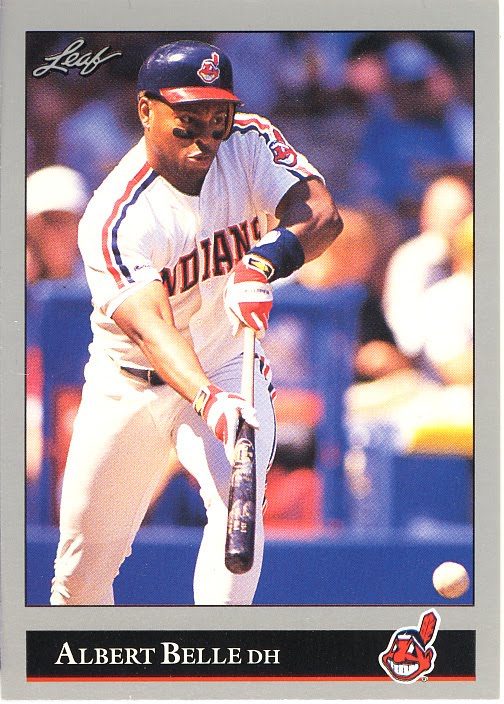
Belle set Sox team HR record in 1998

But as for me, I recall how Baines was the true talent of the White Sox of the 1980s – an era that had one division title in ’83 and a whole string of mediocre to crummy ball clubs in other years.

He was big enough to be brought back to the White Sox for two more stints; in the 1990s and the beginning of the 21st Century – while also bopping about other American League teams as a professional hitting machine. Texas, Cleveland, Oakland and his home city of Baltimore also saw him play – and the Orioles actually include him in the team’s personal Hall of Fame.
 
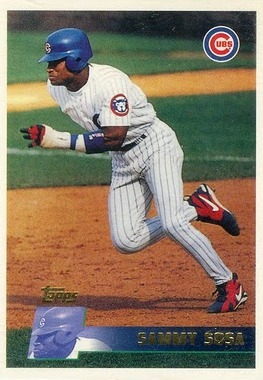
Sosa topped him that same season w/ Cubs

That, and the statue the White Sox have erected to Baines at the newly-renamed Guaranteed Rate Field are likely to be Harold’s honorifics. He did go through a career as a quiet kind of guy who didn’t try to bring a lot of glory to himself.

MOST DEFINITELY UNLIKE Sammy Sosa later of the Chicago Cubs (for whom he was traded to the Texas Rangers for in 1989), who along with Hall of Fame slugger Reggie Jackson may have been the most over-bloated egos to ever play professional baseball.
'Eck' had a Vet Cmte vote Sunday

Not that Harold was the only former Chicago ballplayer or former ballplayer whose name brings to mind bad memories for our local ballclubs to be on the list of considerees by the hall’s Veterans Committee – which considers baseball executives and gives second-chances to former ballplayers already passed over by the Baseball Writer Association of American membership.

There was Albert Belle, the star 1990s slugger for the Cleveland Indians (who belongs to that team’s personal Hall of Fame) who had a two-year stretch with the White Sox – and in fact in 1998 set the team record for the most home runs in a season.
Had Vet Cmte vote, but not enough to get Harold over top

Belle hit 49. But that was the same year that Sosa had his 66 and Mark McGwire of the St. Louis Cardinals hit 70. They “saved” baseball (or so we thought). While Belle was just an afterthought.

McGWIRE WAS ONE of the ballplayers also passed over on Sunday, along with Will Clark of the San Francisco Giants – who in 1989 was the Most Valuable Player of the National League playoffs.

Of course, we in Chicago remember that year as the one in which a Cubs team containing future Hall of Famers Ryne Sandberg and Andre Dawson perhaps should have won – only to get beat by Clark and his big bat.
Came closest to getting elected w/ Chi ties

With the Giants then going on to lose that World Series to the Oakland Athletics – who also were led by McGwire (in his pre-Cardinals days) and Jose Canseco (who finished up with the White Sox in 2001) and Hall of Fame relief pitcher Dennis Eckersley.

I mention Eckersley because it seems that the one-time Cubs pitcher (on that division-winning team of 1984) was among the former ballplayers, along with one-time White Sox star Frank Thomas, to cast ballots on Sunday.

FORMER ATLANTA BRAVES and Kansas City Royals general manager John Schuerholz was picked unanimously, while Selig took 15 of the 16 votes cast.

Lou Piniella, considered for a managerial career that included a stint with the Chicago Cubs, took seven votes, while none of the others under consideration got enough votes for the Hall of Fame to acknowledge their totals.

Not even one-time New York Yankees owner George Steinbrenner, whose professional life also included a brief 1980s stint as a part-owner of pro basketball’s Chicago Bulls.
Would you really rather think about Sunday's snowfall? Photograph by Gregory Tejeda
Of course, Steinbrenner sold out his share of “da Bulls” in the mid-1980s right BEFORE Michael Jordan was drafted out of the University of North Carolina and began the process that led to that 1990s stretch of championships that is Chicago’s only taste ever of New York Yankees-like athletic success.

  -30-

Monday, April 16, 2012

Jackie Robinson ‘Day’ brought to mind memories of Dick Allen, and how things don’t change as much as we’d like

It was Major League Baseball’s annual Jackie Robinson tribute on Sunday – the one where every single ballplayer wears Robinson’s uniform Number “42” on his uniform as a tribute to the first black ballplayer of the 20th Century in the “white” major leagues.

Yet since the ballgame I watched on Sunday was the Detroit Tigers at Chicago White Sox, the Robinson tribute got mixed in with another tribute.

FOR THIS IS the season that the White Sox are paying tribute to their 1972 team that came so close to winning a division title (who’s to say how far they would have gone in the playoffs and World Series that year, if they had made it).

All the White Sox ballplayers were wearing the bright-red and white uniforms that the team wore that season, and they’re going to do so for every Sunday home game.

It was like a whole playing field of Dick Allens were out there. Allen, of course, was the first baseman who was traded away by the Dodgers in ’72, only to have him become the American League most valuable player whose big bat nearly put the White Sox in the post-season that year.

Now what’s the point of thinking about Dick Allen on a day when the “story” is supposed to be sepia memories of Jackie Robinson? Actually, I can’t help but think the two, along with many other ballplayers throughout the years, are intertwined.

FOR THE DAY’S proceedings included the telling of stories about the level of racial harassment that Robinson faced during his first two seasons with the Brooklyn Dodgers. The reality is that those were the two seasons that Robinson was under orders not to fight back or retaliate in any way.

Yet the way the stories get told now, it sounds almost like those were the only two years of harassment, with the rest of baseball coming to accept Robinson and his racial ilk. Now, everything is lovely and peaceful and charming and ….

Nonsense!

The real story of racial integration of professional baseball in this country is that for every ballclub that was willing to advance the “cause” (Brooklyn, the New York Giants and Bill Veeck’s ownership of the Cleveland Indians and St. Louis Browns), there were other ballclubs more than willing to “hold out” in hopes that this “fad” would wither away.

THERE ARE MANY one-time minor league cities that no longer have professional baseball because the teams (and in some cases, entire low-level leagues) preferred to cease to exist – rather than let their on-field activity become “mongrelized.”

This carried well into the 1960s, which is when Allen first came up to the major leagues with the Philadelphia Phillies (who were the last National League team to integrate).

A lot of the incidents that gave Allen a reputation as a head case who was totally disagreeable and not worth having on a ballclub no matter how well he hit can be tied back to people who would have preferred to think of their “colored” ballplayer as some sort of role-playing specialist – rather than as the “star” of the team.

Heck, even the case of his name is a controversy – which is so stupid when you think about it. Allen (it’s Richard Anthony Allen on his birth certificate) always went by “Dick.”

YET BASEBALL OFFICIALS preferred calling him “Richie.” Perhaps the Phillies thought it was colorful. Allen thought it made him sound like a little boy. White fans of that era probably thought he was being “uppity” for complaining.

Part of why Allen had his big year with the White Sox in ’72 (and in general, some competent play until he walked out on the team at the end of 1974 following feuding with team-mate Ron Santo) is that they respected his desires. Although there are countless fans to this day who use “Richie” as a way of disrespecting him.

They may not appreciate the racial overtones, or how they’re carrying on an attitude that should have died decades ago. Actually, it should never have been in place, but that is a debate for another days’ commentary.
Anybody who thinks this is an old issue has obviously forgotten the more recent days of Albert Belle – who went through a similar issue.

HIS FULL NAME is Jojuan Albert Belle, and his original ballclub (the Indians) liked calling him “Joey” – even though Belle hated it for the same reason Allen hated “Richie.”

I can remember once sitting in the right-field stands at then-New Comiskey Park and hearing someone sitting to my right taunting Belle with his chants of “Joey, Joey!”

When I asked him what his point was, he told me, “I’ll tell that n----r what his name is.” This was in 1999 – which means it’s not a lesson in “ancient” history by any means. Considering that the only “black” ballplayers some major league teams now have are the dark-skinned Dominicans and Cubans (like White Sox shortstop Alexei Ramirez), it only adds to the image some people have of baseball as a sport that’s not really interested in celebrating its integration.

Which is my larger point. Trying to remember Robinson and the attitudes against him as some sort of aberration that withered away is completely inaccurate.

IT’S JUST ONE one step away from trying to claim that no one was ever hostile toward Robinson, or black ballplayers in general.

Just like Dick Allen, who is supposed to be on hand for the White Sox’ game against the Milwaukee Brewers on June 24. It’s too bad the whole team couldn’t wear the number “15” that day, as a reminder of how long it took to truly integrate – and how some people were determined to hold out for an all-white game.

  -30-

Monday, October 11, 2010

Baseball enjoys playoff activity while Chicago left with corked bat memories

Two of the biggest moments in baseball that involved “corked” bats involved Chicago baseball, and recently we have received our reminders of both of them.

I have no intention of placing a bid.

BUT IT SEEMS there are people who are interested in buying the bat once used by one-time Chicago Cubs slugger Sammy Sosa that was used to hit a home run in a June 3, 2003 inter-league game against the Tampa Bay Devil Rays.

That is the home run that was later struck down by the umpires on the grounds that the bat was “corked,” meaning it was hollowed out and filled with a lighter substance in a way that makes the bat lighter to swing without reducing its physical mass.

Former Cubs pitcher Mike Remlinger admits he picked up the bat and tucked it away in his locker, then took it home with him at season’s end. It is only now that he is trying to make a few bucks by placing the bat up for auction in hopes that some sports memorabilia geek will be willing to pay something significant for it.

As of Sunday night, there had been 14 bids submitted, with the high bid thus far being just under $2,600. Maryland-based Schulte Auctions is handling this particular event online, with bids being accepted through Oct. 31.

SOMEONE IS GOING to get an expensive Halloween present – a baseball bat that can never be used in a legitimate baseball game.

What makes this moment memorable is that it was this particular moment when Chicago Cubs fans began to consider the possibility that the “star slugger” upon whom their favorite team was completely based might somehow be fraudulent.

As much as I think it is hypocritical for the way in which Cubs fans now dump all over Sosa and try to turn him into a non-person in team history, that particular moment was one of significance.

Because I still remember the justification that Sosa tried to provide for having a corked bat – one so blatantly tampered with that the auction house says it is easily visible just by looking – among the nearly 70 that he owned.

IT WAS HIS “batting practice” bat – one meant to ensure he could hit more long fly balls during pre-game workouts that only Cubs fans could think mean much of anything. Only Sammy could think that batting practice “home runs” were significant.

And soon, someone is going to be able to own that bat. I can’t help but wonder what will become of it.

Will the bat be put on some sort of display for people to see? Or are we going to get someone who thinks they are making a “bold” statement by publicly destroying the bat – similar to how that foul ball that Cubs fan Steve Bartman supposedly interfered with to cost the Cubs the National League pennant that same season?

Ken Burns, in Baseball: The Tenth Inning, his recently aired sequel to his 1994 documentary about baseball and its impact on U.S. culture, included the video of that ball being blown up during an elaborate ritual that I still consider one of the most absurd moments I have ever seen.

IN TALKING ABOUT Sosa’s significance to baseball, Burns didn’t mention the corked bat home run. But he did tell us all about the July 15, 1994 game at New Comiskey Park where Albert Belle, then of the Cleveland Indians, was suspected by umpires of using a tampered baseball bat in a game against the White Sox.

Umpires confiscated the bat, intending to have it closely inspected after the game. But as the New York Times reported years after the fact, Indians pitcher Jason Grimsley broke into the umpires’ dressing room to steal the bat back – knowing full well that Belle was guilty and would get hit with massive penalties unless the “evidence’ was destroyed.

Not that the thought of a ballplayer in mid-game sneaking through the crawl space above the locker rooms isn’t mildly amusing in a warped sense of the word. The “Mission Impossible” theme music plays in the background.

But listening to commentators talk about how “honorable” it was that Grimsley (who personally described the moment as, “one of the biggest adrenaline rushes I’ve ever experienced”) would put himself at risk by snatching the bat back was a bit much to endure.

IN FACT, ABOUT the only thing that made the moment endurable is the fact that Belle’s reputation got so tainted that no one ever forgot it. I still recall the sight of the Chicago White Sox a few years later auctioning off some surplus equipment, including a Belle bat from his two years on the South Side that had been sawed down the middle so as to verify that it was pure lumber.

So at a time when baseball fans are focused on the playoffs, and New York Yankees fans are already anticipating the victory celebration through the streets of Manhattan, we in Chicago are left with these memories of cork (which in some cases is actually rubber) in bats.

Unless we want to get all excited about former Cubs pitcher Kerry Wood’s performance on Saturday – one-third of an inning pitched, with three hits and allowing the lone run that the Minnesota Twins managed to score before being sent home along with the White Sox players to watch the World Series this year on television.

  -30-